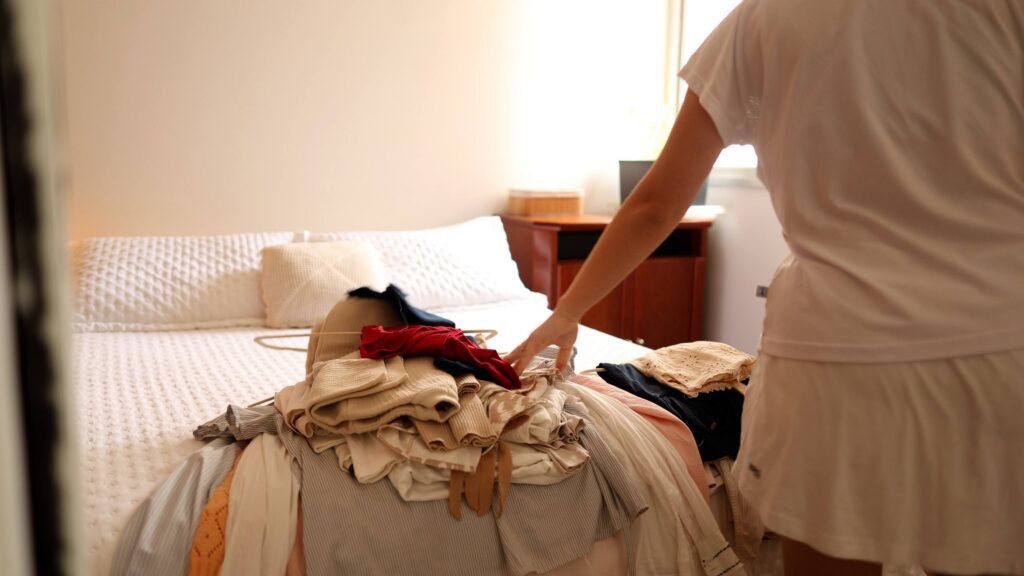

Letting go of possessions is rarely just a matter of cleaning up. For many people, it involves habit, emotion, identity, and the quiet pressure of “what if I need this someday?” This recap of 55 practical ideas reframes decluttering as a learnable skill rather than a painful sacrifice. The central message is simple: saying goodbye to unused things can create more space, more time, and more peace of mind.
Why decluttering feels so difficult
One of the strongest insights in the list is that minimizing is hard, but not impossible. People often assume they are simply “bad” at throwing things away, when in reality decluttering takes practice. Many belongings are tied to guilt, memories, aspirations, or an image we want to project. Asking why a certain object feels hard to release can reveal whether it still serves a real purpose or only occupies physical and mental space.
The advice also highlights an important limit: our brains, energy, and time are finite. Every object demands some degree of attention, whether through cleaning, storing, organizing, or simply remembering it exists. In that sense, clutter is not neutral. It can quietly drain focus and make a home feel heavier than it needs to be.
How to start without feeling overwhelmed
A practical way to begin is by acting immediately and choosing something easy. Start with obvious junk, forgotten items, or duplicates. Reducing multiples is often less emotionally difficult than parting with a one-of-a-kind possession, and it can quickly build momentum. Another useful guideline is the one-year rule: if you have not used an item in a year, it may be time to reconsider whether it belongs in your life.
The recap also draws a sharp distinction between organizing and minimizing. Neatly storing excess items is not the same as reducing them. In fact, clutter often hides in storage spaces, which is why tackling the “nest” before the “pest” is such effective advice. Empty space does not always need to be filled, and resisting that impulse can be an important part of long-term organization.
The emotional side of owning less
Some of the most compelling tips focus on identity and memory. Many people keep things for appearances, for a future version of themselves, or for a past version they have not fully let go of. The article encourages readers to separate wants from needs and to release the idea of “someday” when it no longer reflects reality. Saying goodbye to certain possessions can also mean saying goodbye to outdated expectations about who you were supposed to be.
For sentimental items, the advice is gentler than simple disposal. Taking photos can preserve the memory while reducing the physical burden. Going digital often makes it easier to revisit meaningful moments without devoting drawers, shelves, and boxes to them. This is a practical middle ground for anyone drawn to minimalism but reluctant to lose emotional connections.
What you gain when you let go
Perhaps the most reassuring idea in the recap is that people often gain more than they lose when they discard unnecessary things. A less crowded home can mean easier cleaning, faster decisions, lower stress, and a stronger sense of control. Even the provocative comparison that possessions are like roommates works because it captures a truth: the things we own take up room, demand care, and shape how we live.
Ultimately, decluttering is not about deprivation. It is about deciding what deserves space in your home and in your attention. By removing what is unused, duplicated, forgotten, or emotionally heavy, people can create a calmer environment that better supports everyday life. That is the deeper promise behind organization, decluttering, and even minimalism: not empty living, but more intentional living.
Key Terms
- Decluttering: Removing items you no longer need or use in order to create a cleaner, less crowded space.
- Minimalism: A lifestyle or mindset focused on keeping fewer possessions and prioritizing what is useful or meaningful.
- Organization: Arranging items in a structured way, although this is not the same as reducing how much you own.
- Duplicates: Extra copies of the same kind of item, such as multiple tools, containers, or clothing pieces.
- Sentimental items: Objects kept mainly because they carry memories or emotional significance.
- Digital: Stored electronically, such as photographs saved on a phone, computer, or cloud service instead of in physical form.
- Clutter: A buildup of too many items in a space, making it feel disorganized, crowded, or stressful.